
Hey guys, David Roland here. Today I am going to giving you an
overview of the drop shot rig. It is a technique most of us southern
anglers cringe about when we hear it. I wanted to take the opportunity
to shed some light on the great benefits of the rig and why you should
always have one rigged up in your boat. I will go through the basic
details of components needed, how to fish it, and lastly my personal set
up for this technique. I hope you enjoy.
I‘ve heard it called
several things in my years of fishing; the dropshot, down shot, or under
shot and even power shot. Its effectiveness is proven in nearly every
area of the world. Most commonly it is used as a finesse application
with small weights, hooks, and soft plastic lures. When dropshotting
first came to the United States most anglers used it as a deep water
technique; fishing directly under the boat for lethargic or suspended
fish, especially out west where tournament anglers won a lot of money
catching tough winter bass in depths of up to 100 feet! Since then more
and more people have used the dropshot the same way they would use any
other finesse worm technique like split shotting or darter heading; cast
it up on the bank and shake it back to the boat, working through
structure and along ambush points. The components for drop shotting
(hooks, weights and lures) have evolved immensely over time and every
rod manufacturer produces a rod specifically for this technique (that
should tell you something).

If you fish plastic lures on a texas
or carolina rig, YOU CAN DROP SHOT. Pick you up some hooks and weights
by your manufacturer of choice and you're in business, you just have to
know the PalomarKnot
http://youtu.be/Rxj55MXLg0w
to rig it correctly. Or, you can buy dropshot rigs pre-tied from
Gamakatsu, just tie a small barrel swivel to you line and tie on the
Gamakatsu rig. Hook sizes range from 2/0 down to #6 with #1 and #2 being
the most popular. Weights range from 1/8 up to 1/2 ounce, but the most
popular weights are 3/16 and 1/4 ounce. This is a light line technique
and 4-10 pound test is usually the range with most anglers using 6-8
pound. Fluorocarbon line has also gained in popularity with dropshot
anglers and some people use fluorocarbon up to 12 pound test. Most
anglers throw the rig on a light spinning rod but baitcasting outfits
are being used more frequently, especially in Southern California where
dropshotting is a part of just about every bass fisherman's game plan.
If line twist becomes a factor after a long day of dropshotting, try
tying a small barrel swivel 18 inches or so above the hook.


Drop
shot baits have come along way, from thin finesse worms to leaches and
shad style baits, the possibilities are endless, but most anglers choose
a 3-5 inch straight tail or curl tail worm or one of the new dropshot
minnows. Zoom makes a Tiny Brush Hog for dropshotting and many people
opt for one of the Slim Senkos, but the key is to make sure there is
plenty of action when you are working the rig. Generally the bait is
'nose hooked;' the tip of the worm is impaled on the hook and pushed
down onto the bend which leaves an open hook, so often the bass hooks
itself when they bite. Sometimes wacky rigging (hooking the middle
section of the worm) is effective, especially with the Senkos. If you're
fishing in an area where there is wood on the bottom, try a #1, #2, or
#4 wide gap hook and 'Texas-rig' the worm to avoid sticking the hook
into the brush. When you are not using an open hook you should opt for
slightly heavier line since you have to set the hook with some power to
push the point through the worm and into the fish's jaw.
The
length of the 'leader,' or the line that extends below the hook that the
weight is attached to, is also crucial. When fishing rock or mud banks,
anywhere from 6 to 18 inches of leader is appropriate, depending on
what the fish are doing; suspending or relating to the bottom, eating
shad or crawdads. If you are fishing in a lake with lots of grass and
weeds or other bottom clutter, make the leader long enough so the worm
is above the weeds so the bass can see it. Chances are most bass have
not seen a juicy-looking Green Weenie dancing along above the weeds and
it will be irresistible!
Now that you’ve got your gear and
components lets go FISH ! Cast the rig out to the spot you intend to
fish. If you fish light worms or jigs, you know the 'feel' of the
bottom. If you are not so familiar with those techniques, drop your rod
tip from time to time and make sure there is slack in your line, which
indicates the weight is resting on the bottom. If the line stays
straight it means the weight is still dropping and you should let out
enough line to reach bottom. Gently shake the worm and make it dance a
few inches off the bottom while the weight stays on the bottom, and
you'll get bit. Being subtle with this technique is key. Overworking is a
big problem anglers have with this rig which causes them not go get
bites. In my recap video I will show you some important tips on working
the bait and giving a great presentation (be on the lookout for the
video)!
Drop shotting is also a deadly technique on deep,
suspended fish. If you locate a school of bass suspended on deep
structure, position the boat over or near them and drop the bait right
on top of them. Shake the worm keeping the weight on the bottom with
some long pauses and work the area carefully, especially in the cold
months and your patience may be rewarded with a livewell full of quality
bass no one else can catch. This is the time that a long leader may be
in order, try to make it long enough to put the worm at the level the
fish are holding; 3, 4, 5 feet or more is sometimes necessary.
Often
the take is virtually undetectable and you may just notice a little more
weight on the line. In that case set the hook. In this game, swings
don't count against you. Many experienced dropshotters will occasionally
lift the rig a few feet just to see if there's a fish on the hook that
they didn't feel. Work the bait through the area you think the fish are
holding, crank up and repeat. One of the benefits of using the dropshot
weights is that if they get hung up and you can't shake them loose, when
you pull hard the clip will cut the line and all you need to do is clip
on another weight and you're instantly back in the water.
Many
anglers prefer the 'reel set' to set the hook rather than the
traditional 'rip lips' hookset. The sharp, light wire dropshot hooks
will penetrate easily with light pressure and you risk breaking the
light line on a heavy fish with a hookset that is too hard. A 'reel set'
just means you reel in line as you lift the rod, all in one motion
creating a steadily increasing pressure on the point of the hook instead
of quick, sharp, line snapping jerks.
Now is the time you hope
you've invested in good equipment and that it is well maintained. A
heavy bass will put up a pretty good fight on the light rig and you'll
want the hook to be sharp and rust free and the drag on your reel to
pull smoothly and not start up with a jerk. You'll also want your rod to
be strong enough to move the fish away from line busting cover, but
soft enough to protect the light line from a sudden run, especially at
the boat. If all these components are perfect and you can keep your
adrenaline under control, you'll be amazed at the quality of fish you
can catch on this exciting light line technique.
Here is the rundown on my gear used for drop shotting.
Rod: St. Croix Mojo, 6’9” ML drop shot rod.
Reel: Abu Garcia Spinning Reel size 30.
Line: 10lb Berkley NanoFil with 8lb Trilene Monofilament leader.
Lures: Zoom Finesse worm, Ultravibe Speed Craw, Senkos.
Hooks: VMC SureSet Drop Shot Hooks in size #1 or #2
Weights: VMC Tungsten Drop Shop Weights Ball in 1/8 oz or 3/16 oz. In water over 20’ I will used a ¼ oz.
Well
guys if you took the time to read all this I appreciate it and hope you
have a better understanding of this rig and what its all about. Again
be on the lookout for my video.
Tight Lines,
David Roland

 Shakin’ things up
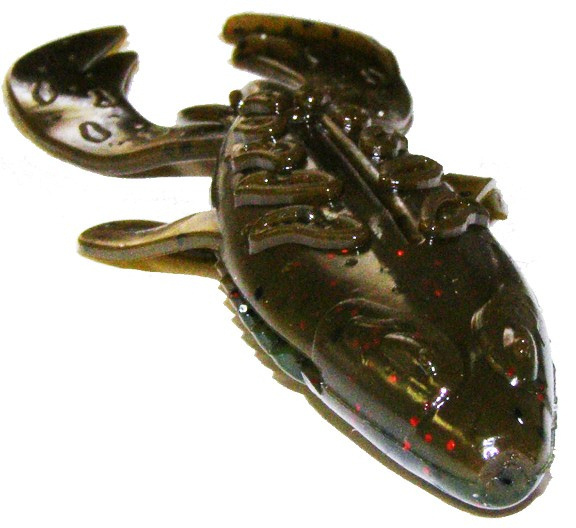
 For today, the last way I’ll cover this bait, is using it as
a jig trailer. In either of my last two scenarios, if I’m looking for that
kicker, I’m pulling out a jig. When I’m flippin’ a jig, I like to pinch of the
first little bit of the “frog” to make it a little more compact. It just seems to
go in and out of tight places a lot better that way. But, if I’m fishing deep,
I’ll thread the whole thing on the back of an All Terrain football jig and drag
that sucker around. I use the same flippin’ set-up as before. For the football
jig, I use a 7’11’’ heavy action rod and a high speed reel to help me get a
solid hookset on the end of a long cast. I still opt for 20 lb fluorocarbon,
because like I said, I’m hunting that big fish. Once he’s hooked, he won’t
stand a chance.
For today, the last way I’ll cover this bait, is using it as
a jig trailer. In either of my last two scenarios, if I’m looking for that
kicker, I’m pulling out a jig. When I’m flippin’ a jig, I like to pinch of the
first little bit of the “frog” to make it a little more compact. It just seems to
go in and out of tight places a lot better that way. But, if I’m fishing deep,
I’ll thread the whole thing on the back of an All Terrain football jig and drag
that sucker around. I use the same flippin’ set-up as before. For the football
jig, I use a 7’11’’ heavy action rod and a high speed reel to help me get a
solid hookset on the end of a long cast. I still opt for 20 lb fluorocarbon,
because like I said, I’m hunting that big fish. Once he’s hooked, he won’t
stand a chance.


